Are Shlokas More Powerful for Kids Than You Think?
Are Shlokas More Powerful for Kids Than You Think? If you’ve ever watched a child chant a simple shloka with innocence and concentration, you’ve probably felt a sense of quiet beauty in that moment. What may surprise you, though, is that this ancient practice is doing far more than teaching them a verse—it’s actively shaping their brain, their emotions, and even their sense of identity. What our grandparents believed intuitively, modern neuroscience is now confirming: chanting mantras can truly influence how children think, feel, and grow.
Let’s take a warm, conversational walk through how shlokas help children, and simple examples from everyday life.
The Neuroscience Behind Chanting: Why These Sounds Matter
Most people assume chanting is a spiritual practice, and while that is certainly true, the science behind it is equally compelling. When a child chants a shloka, two major things happen simultaneously: they’re creating rhythmic vibrations through sound and they’re engaging in deep, controlled breathing. This combination is incredibly powerful for the brain.
Neuroscientists explain that specific sounds—like the “mmm” in Om or the long vowels in classical Sanskrit—stimulate the auditory cortex. This part of the brain helps children pay attention, process sounds more efficiently, and stay focused on what they hear. The repetition also encourages the brain to synchronize its internal rhythms, nudging it toward a calmer, more meditative state without the child even realizing it.
At the same time, the breathing pattern that naturally accompanies chanting activates the vagus nerve, a major nerve that runs from the brain all the way through the abdomen. When the vagus nerve is stimulated, the body relaxes, stress levels drop, and emotional balance improves. This is why even energetic toddlers often quiet down when they chant—even if they don’t fully understand the words yet.
How Shlokas Strengthen Memory, Focus, and Cognitive Growth
One of the most remarkable things about chanting is how positively it influences memory. Shlokas are rhythmic, structured, and repetitive, which makes the brain more receptive to storing and retrieving information. Neuroscientists often talk about the “Sanskrit Effect,” a term popularized after a study by Dr. James Hartzell showed that people who regularly memorize and chant Sanskrit have higher gray matter density in areas of the brain associated with memory and learning.
Now, this doesn’t mean a toddler needs to become a Sanskrit scholar. Even simple, short verses do the job. Children naturally love rhythm—think of how easily they pick up nursery rhymes—and shlokas are essentially rhythmic poems with a spiritual heart. When a child chants, they are strengthening the hippocampus, the part of the brain responsible for long-term memory, and they are doing so in the most natural, effortless way.
Chanting also enhances attention span. In a generation full of screens and distractions, it’s getting harder for children to stay focused. But chanting requires them to pay attention to pronunciation, breath, tone, and rhythm all at once. This engages the prefrontal cortex, which helps with concentration, self-control, and decision-making. Brain-wave studies show that chanting increases alpha waves, associated with calm focus and mental clarity. Children who chant regularly often perform better in class because they can stay with a task for longer.
Another lovely outcome of chanting is language development. Sanskrit is a beautifully precise language, and chanting exposes children to a variety of phonetic sounds. This sharpens their articulation and teaches them how to control their mouth, breath, and tongue movements. Many parents notice improvements in speech clarity, vocabulary, and expression when children recite shlokas consistently.
The Emotional Magic
Let’s be honest: childhood can be overwhelming. Every day brings new experiences, new expectations, and new emotions—often more than a young brain can comfortably process. It’s no surprise that studies today show rising levels of anxiety, overstimulation, and emotional fatigue in children. Their minds are constantly juggling information, sounds, screens, and social pressures in a way that previous generations simply didn’t experience.
This is where chanting shlokas offers something truly special: it becomes an emotional anchor.
When a child chants, their breathing naturally slows down and becomes more rhythmic. This activates the body’s built-in “rest and relax” mode. Neuroscience research consistently shows that slow, steady breathwork:
- reduces heart rate,
- lowers cortisol (the primary stress hormone), and
- calms down the amygdala, the brain’s alarm system responsible for fear and emotional reactivity.
Because of these effects, children who chant regularly often show fewer signs of anxiety, especially before exams, competitions, or unfamiliar situations. The rhythmic repetition of shlokas soothes the nervous system and encourages emotional stability. When the amygdala is calmer, children can regulate emotions more easily—whether they’re dealing with frustration, anger, fear, or sudden changes. They start to respond rather than react, showing quicker recovery after emotional setbacks.
Parents frequently notice that children who chant also seem happier overall. Chanting stimulates the release of dopamine, the neurotransmitter associated with joy, satisfaction, and motivation. Over time, children begin to associate chanting with comfort, safety, and positivity, turning it into a healthy coping tool they can rely on throughout life.
What’s even more beautiful is that the sound vibrations from shlokas like the Gayatri Mantra, Saraswati Vandana, or even the rhythmic verses of Hanuman Chalisa have a naturally calming effect. Listening to them soothes the mind; reciting them deepens that effect even more.
In simple terms, chanting helps children:
- Feel calmer and more grounded
- Manage emotions with better balance
- Reduce tantrums and emotional outbursts
- Improve overall mood and resilience
Shlokas don’t just create spirituality—they create emotional strength, neurological balance, and a sense of inner peace, all of which children need now more than ever.
Spirituality, Identity, and Inner Growth
1. A Sense of Purpose and Identity
Beyond the brain and body, shlokas touch something deeper within a child. Even if they don’t fully understand the meaning yet, the rhythm and energy of the chants help them feel connected to something larger than themselves. Shlokas gently root children in their cultural heritage, giving them a sense of continuity, belonging, and purpose. In a world that’s constantly changing, this spiritual and cultural grounding becomes a powerful emotional anchor. It builds self-confidence, provides stability, and helps children feel secure in who they are and where they come from.
2. A Moral and Ethical Foundation
Many shlokas carry timeless values—gratitude, humility, respect, courage, truth, kindness, and compassion. These values seep into a child’s consciousness naturally through repetition, even if they don’t yet understand every word. Over time, these teachings shape their moral compass and help them make kinder, more thoughtful choices. Chanting becomes a gentle way of nurturing character, reminding children of the principles that lead to integrity, empathy, and emotional maturity.
3. Strengthening Mindfulness and Inner Awareness
Chanting also introduces children to mindfulness in the simplest, most effortless way. As they focus on their breath, pronunciation, and the flow of sound, they automatically become more present. This quiet awareness helps reduce overthinking and emotional clutter while improving clarity and decision-making. Children who chant regularly learn to pause, reflect, and understand their inner world better. Without any pressure to “meditate,” they naturally become calmer, kinder, and more confident individuals.

Why Shlokas Matter So Much in Early Education
Early childhood is a magical window of brain development. This is when children absorb rhythm, sound patterns, and language with incredible ease. Introducing shlokas during this stage can dramatically boost cognitive growth, emotional balance, and overall learning.
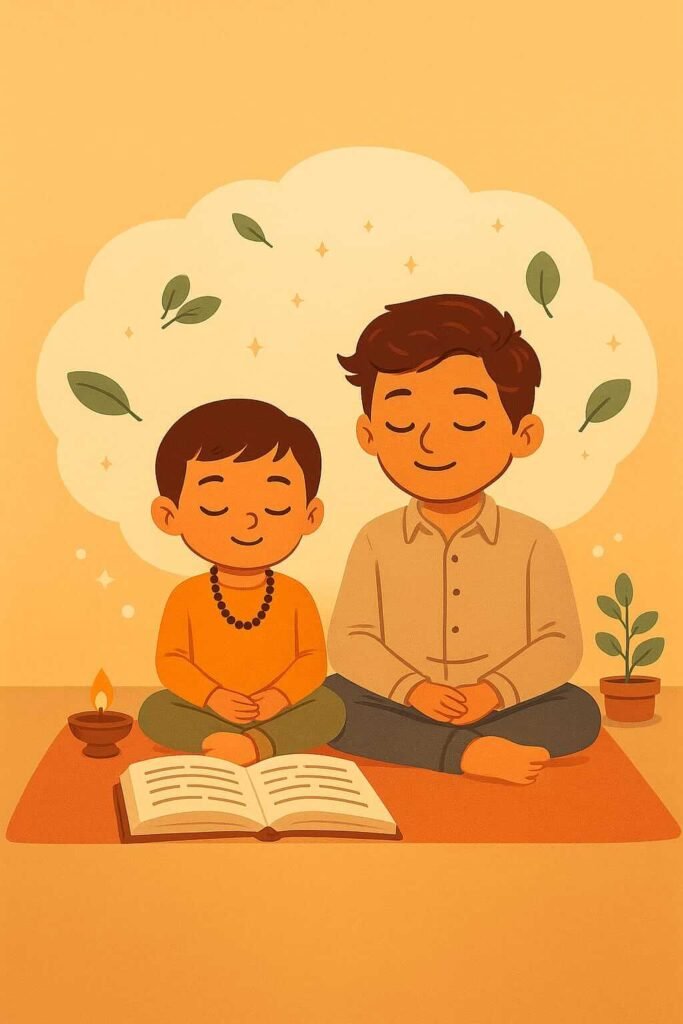
Shlokas help young children build discipline and routine in a gentle, soothing way. A short chanting session in the morning or before bedtime becomes a moment of pause—a small ritual that gives structure to their day. When parents and children chant together, it also creates a warm bonding experience filled with connection and closeness.
Teachers often find that children who chant regularly show better behavior, improved listening skills, and greater participation in group activities. It’s no surprise—chanting brings a sense of mindfulness, grounding, and emotional stability that carries over into every part of their day.
How to Teach Shlokas to Children in a Simple, Fun, and Natural Way
If you’re wondering how to introduce shlokas without overwhelming your child, children respond beautifully when chanting feels fun and meaningful.
- Start with very simple mantras or short shlokas—something they can repeat after you without pressure.
- Explain the meaning in child-friendly language so they feel connected to the words.
- Visual cues like storybooks, pictures of deities, and colorful flashcards can make chanting more engaging.
- Many parents also use clapping rhythms or soft background music to help children find the flow.
- Routine plays an important role. Children thrive on repetition, so chanting at the same time every day—even for just five minutes—can make a big difference.
- Keep it playful. If a child mixes up words or giggles mid-chant, it’s completely fine. Over time, they learn naturally.
- Gradually Focus on Breath. Teach them to breathe deeply and chant slowly. This maximizes neurological and emotional benefits.
- Be Patient. Children may mispronounce or forget. Encourage them, celebrate small wins, and enjoy the journey together.
- And of course, leading by example is the most powerful teaching method. When children see parents chant peacefully and joyfully, they instinctively join in and build their own connection to the practice.
Research that Supports These Benefits
Here are a few studies that highlight the impact of mantra chanting and Sanskrit learning in adults:
- Dr. James Hartzell’s research on Sanskrit scholars found increased gray matter density and enhanced memory capabilities among individuals who memorized Sanskrit verses for years.
- A study by the NYU School of Medicine showed that mantra meditation reduces activity in the brain’s “wandering mode” network, improving focus and presence.
- A 2011 study in the Journal of Human Neuroscience found that chanting “Om” deactivates the amygdala, reducing stress and emotional over-reactivity.
- Research on vagal nerve stimulation highlights how extended exhalations—similar to chanting—promote emotional regulation and relaxation.
- Studies published in the International Journal of Yoga show that mantra recitation increases alpha waves, which are associated with relaxation, creativity, and improved mental clarity.
Final Thoughts
Chanting shlokas with children is so much more than a ritual. It’s a gentle, science-backed way of nurturing their minds, their hearts, and their inner world. It strengthens memory, improves focus, deepens emotional resilience, and connects children to a rich cultural and spiritual heritage. More importantly, it gives them a sense of peace—a quiet refuge they can carry with them throughout life.
With just a few minutes a day, you’re planting seeds of mindfulness, strength, and inner harmony that will grow along with your child, shaping them into centered, compassionate, and confident individuals.
Also Read my Building Strong Foundations: A Parenting Guide for Every Stage blog here.
Your voice matters—share your experiences or questions in the comments, and don’t forget to rate the post to help more parents find it! Your feedback helps me create more helpful content.
Subscribe and Never Miss a Motivational Boost !!